


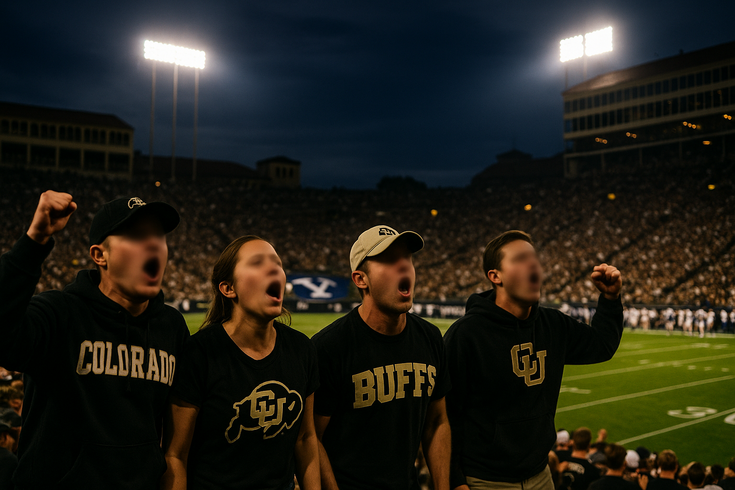
Fans’ chants spark controversy
Saturday night at Folsom Field turned into more than just a football showdown when a segment of the crowd let loose with chants that targeted the visiting BYU Cougars. While the on‑field action saw the Cougars rally to a 24‑21 win, the off‑field noise raised eyebrows across the conference. Witnesses described the chants as hateful and discriminatory, prompting immediate backlash from university officials, alumni, and the Big 12 itself.
Colorado’s head coach, Deion Sanders, later issued an apology on behalf of the program, acknowledging that the behavior did not reflect the values the team strives to uphold. “We’re disappointed and we’re sorry,” Sanders said in a post‑game press conference, adding that the university would work to prevent a repeat of such incidents.
Big 12 steps in with penalty
On Tuesday, the Big 12 Conference released an official statement confirming that the University of Colorado would receive a public reprimand and a $50,000 fine. The sanction is tied to the conference’s Principles and Standards of Sportsmanship, which explicitly prohibit hateful or discriminatory language in any form.
Commissioner Brett Yormark emphasized the league’s zero‑tolerance stance: “Hateful and discriminatory language has no home in the Big 12. While we appreciate Colorado apologizing for the chants that occurred in the stands during Saturday’s game, the conference maintains zero tolerance for such behavior. Colorado will receive a $50,000 fine in accordance with our policies.”
The fine will be paid to the conference’s scholarship fund, a common practice for penalties of this nature, and the public reprimand will be recorded in the conference’s official archives.
What the fine means for Colorado
For the Buffaloes, the $50,000 hit arrives at a tricky moment. The team sits at 2‑3 on the season, still searching for its first conference win. Financially, the penalty is manageable for a program of Colorado’s size, but the reputational sting could linger.
University officials have pledged to launch an educational campaign aimed at fans, focusing on respect, inclusion, and the impact of language. The athletic department is also reviewing security protocols to better monitor crowd behavior during high‑stakes games.
From a recruiting standpoint, the incident could be a red flag for prospective players who value a supportive environment. However, Coach Sanders’ high‑profile status and his promise to “clean up the house” may help mitigate any long‑term fallout.
Looking ahead: Buffaloes vs. TCU
The next test comes this week when Colorado travels to Fort Worth’s Amon G. Carter Stadium to face the TCU Horned Frogs. Kickoff is slated for 5:30 p.m. Mountain Time and will be broadcast on FOX.
Both teams are fighting for a foothold in the Big 12 standings, and the Buffaloes will be eager to snap their conference losing streak. The move to an away game adds another layer of pressure, especially as the program strives to demonstrate that the recent incident was an isolated lapse rather than a symptom of a deeper cultural issue.
TCU’s defensive line, known for its aggressive pass rush, will test Colorado’s offensive adjustments. Meanwhile, the Horned Frogs will likely keep a close eye on the Buffaloes’ fan section, hoping to avoid any repeat of the previous night’s controversy.
Broader conversation on sportsmanship
The incident adds to a growing list of collegiate programs grappling with fan behavior in the age of social media. From chants targeting specific religious groups to overtly political slogans, universities are under increasing pressure to police stadiums without dampening the passionate atmosphere that makes college football special.
Experts suggest that education, rather than punishment alone, is the key to lasting change. Initiatives such as pre‑game videos, in‑stadium announcements, and community outreach programs have shown promise in other conferences.
In the meantime, the Big 12’s decisive action sends a clear message: the league will not tolerate language that undermines its commitment to an inclusive, respectful sporting environment. Whether this will translate into a measurable shift in fan conduct remains to be seen, but the Buffaloes’ fine serves as a cautionary tale for every program that thinks a few chants can be brushed off.
As the season unfolds, all eyes will be on Colorado’s next performance on the field and off the field. The team’s ability to rebound from a loss, a fine, and a public reprimand could become a defining narrative for the rest of the year.

