


The Setup
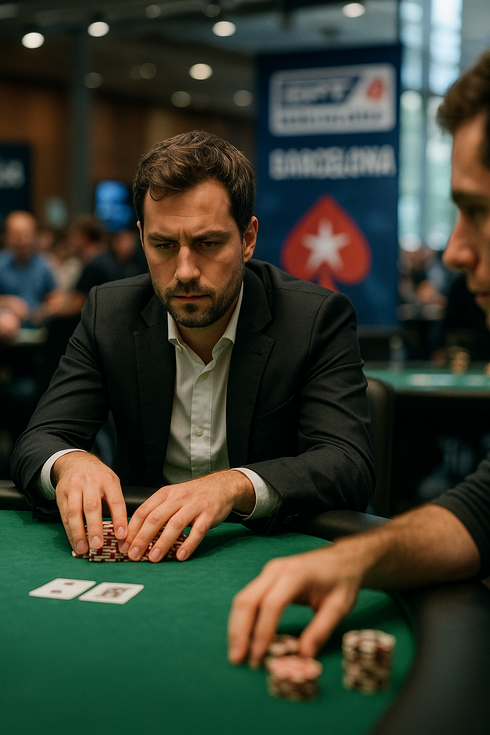
At the climax of the €5,300 EPT Barcelona Main Event, six players were left battling for a €1.4 million prize pool. Anton Suarez, perched on the button, opened the hand with ace‑queen offsuit (♥A ♣Q). Thomas Eychenne, defending the big blind with suited connectors 5♥ 4♥, called the raise. The board ran out 10♥ 5♦ 3♠ Q♥ 5♣, giving Suarez top pair with the nut kicker and Eychenne a set of fives.
After a sizable river bet from Suarez, Eychenne shoved all‑in, forcing Suarez to decide with his remaining 1,030,000 chips. He called, only to be eliminated in sixth place. Was that call a mistake, or did the GTO model simply highlight a better line?
Pre‑Flop: Solid Foundations
Opening the button with AQo is textbook play in a six‑hand scenario. The raise builds a pot, isolates the big blind and leverages the positional advantage. GTO solvers give a green light to this move, especially when the button’s range is wide.
Eychenne’s decision to defend with 5♥ 4♥ also aligns with optimal theory. Suited connectors thrive in big‑blind defense because they keep the pot manageable while retaining strong post‑flop equity. Both players started the hand on solid footing.
Flop: A Missed Opportunity
The flop came 10♥ 5♦ 3♠, a relatively dry texture that still offers a flush draw and a gutshot. Both players checked. While checking isn’t a disaster, the solver suggests a continuation bet on this board at a modest size (roughly 18‑25 % of the pot) would have helped Suarez keep his range balanced.
By checking, Suarez left the board open, allowing the big blind to keep a wider checking range that includes many weak hands. A small flop bet would have forced the opponent to either fold or continue with a narrower, more defined range, simplifying later decisions.
Turn: Top Pair, Top Kicker
The queen of hearts arrived, giving Suarez top pair with the best kicker and completing a flush draw for Eychenne. The big blind checked again, and Suarez bet 750,000 into a 2,250,000 pot (about 33 %). The solver recommends a full‑pot bet here to extract maximum value and to set up a geometric river shove.
Eychenne’s call is perfectly fine – 5♥ 4♥ retains equity with its flush draw and a pair, and the solver often mixes calls with occasional raises in this spot. The key takeaway is that a larger turn bet would have increased fold equity against weaker hands and forced a more polarized river range.
River: The Critical Juncture
The river paired the board with the 5♣, giving Eychenne trips. He checked, and Suarez shoved 2,500,000 into a 2,875,000 pot (about 87 %). The GTO model flags this sizing as too large for AQo.
According to the solver, the optimal move for AQo on this board is either a check or a smaller bet around 65‑70 % of the pot. A big bet of 90 % compresses Suarez’s perceived range to only premium hands and bluffs, making it easier for an opponent to respond correctly.
Eychenne’s all‑in, while aggressive, also loses EV compared to a flat call. With a set of fives, a call captures value from AQo and other queen‑type hands without risking additional chips. The solver shows that over‑jamming in this spot rarely adds value and can hurt under ICM pressure.
What the Solver Says About the River Call
When faced with a near‑full‑pot shove on a paired board, AQo’s equity is marginal. The solver’s analysis indicates that the expected value of calling is negative when the opponent’s range includes strong made hands like trips. In other words, the call was too thin – the risk outweighed the reward.
Had Suarez opted to check the river, he would have kept the pot smaller and avoided the all‑in confrontation altogether. Alternatively, a smaller bet on the turn (full pot) followed by a modest river bet could have induced a fold from the big blind’s weaker draws, preserving his chip stack for later stages.
Key Lessons From the Hand
- Flop Betting Matters: Even on dry boards, a small continuation bet helps balance your range and protects against opponent’s unchecked aggression.
- Turn Sizing Is Crucial: Betting the full pot on a turn that gives you top pair can set up a clean river shove and increase fold equity.
- Avoid Over‑Sizing on the River: When you hold a hand like AQo on a paired board, a large bet narrows your perceived range and makes it easier for opponents to make the correct call or shove.
- Consider ICM Pressure: In the final stages of a tournament, preserving chips can be more valuable than squeezing marginal value from a single hand.
Bottom Line
Both Suarez and Eychenne made largely GTO‑compliant decisions up until the river. The divergence happened when Suarez chose a 90 % river bet and later called an all‑in with AQo. The solver’s recommendations suggest a more conservative approach – either checking the river or betting a smaller amount earlier to avoid the high‑risk showdown.
In live tournament play, the ability to spot such sizing missteps can be the difference between a deep run and an early exit. As the hand shows, even elite players can slip on the final streets, and a solid GTO framework helps flag those moments before they cost you a seat at the table.

