


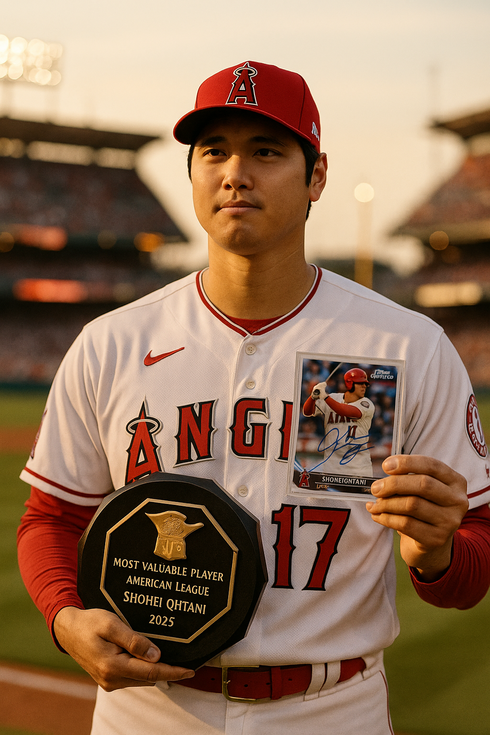
When you hear that a single baseball card sold for three million dollars, you might wonder if you’re still reading about baseball or have slipped into a Hollywood script. Yet that’s exactly what happened in December 2025 when a one‑of‑one, on‑card‑autographed Shohei Ohtani MVP award card changed hands for $3 million, buyer’s premium included. The sale, conducted through Fanatics Collect, didn’t just break a record – it rewrote the rulebook on what modern baseball memorabilia can fetch.
Let’s unpack why this particular piece of cardboard is worth more than a small house. The card in question is the 2025 Topps Chrome MVP Award Gold MLB Logoman Ohtani. It’s part of a partnership between Major League Baseball and Nike, where the jerseys of last season’s award winners sport a gold MLB logo the following year. That gold‑stamped jersey is then cut into a card, and in Ohtani’s case, the card was signed by the Japanese phenom himself and individually numbered as the sole copy of its kind.
What makes the card even more special is the game‑used patch sewn onto it. The patch comes from the April 29, 2025, Los Angeles Dodgers win over the Miami Marlins – the game where Ohtani belted his seventh homer of the season. The patch sits on the reverse side, accompanied by an MLB authentication hologram that guarantees its provenance. In the world of high‑end sports cards, a game‑used element is the holy grail, and a patch from a milestone performance adds a layer of narrative that collectors can’t resist.
Before Ohtani’s $3 million masterpiece, the record for a modern baseball card sat at $1.067 million, also for an Ohtani card – the 2024 “50‑50” card that featured a piece of the pants he wore while hitting his 49th, 50th, and 51st home runs and stealing his 50th and 51st bases. That card sold at Heritage Auctions in March 2024. Even before that, the benchmark was the $3.96 million Mike Trout rookie Superfractor that fetched a jaw‑dropping price in 2020. So Ohtani’s latest sale didn’t just beat the previous Ohtani record – it nearly tripled it, catapulting the Japanese superstar into the upper echelons of sports‑collectible lore.
Kevin Lenane, Fanatics’ vice president of marketplace, summed up the moment nicely: “Ohtani is just this international Babe Ruthian figure, which is really hard to top. We try to listen to the collecting community and we heard this loud and clear: In high‑end cards, if you’re going to have patches that are worth a lot of money, let’s make sure you can trace them back to the exact game.” Lenane’s comment underscores a broader trend: collectors are no longer satisfied with a signature or a rookie‑year card; they want a story, a piece of the action, something you can point to and say, “That’s the exact moment this legend did something unforgettable.”
Ohtani’s card is also Fanatics Collect’s most expensive sale ever, and it marks the highest price paid for a modern baseball card since the Trout Superfractor. The platform, which has become a powerhouse in the memorabilia space, is now the go‑to marketplace for premium, limited‑edition pieces. Its success reflects a shift in the collectibles market that mirrors the rise of NFTs: scarcity, verifiable authenticity, and a strong narrative drive demand.
Speaking of narratives, Ohtani isn’t the only athlete whose cards are inflating at a meteoric rate. In the same auction that featured the Ohtani MVP card, a 2025 Topps Chrome Silver Pack ‘80 Superfractor Cooper Flagg – styled after a classic 1980‑81 Topps set – sold for $216 000, more than double the previous Flagg record. Meanwhile, Paul Skenes’ 2024 Topps Chrome Update debut patch card fetched $1.11 million, and Caitlin Clark’s 2024 Panini Instant Rookie Royalty WNBA Flawless Platinum Logowoman card went for $660 000. These figures illustrate a broader appetite for high‑end, sport‑specific memorabilia, especially when the athletes involved are at the very top of their games.
Why are these cards suddenly worth so much? Part of the answer lies in the post‑pandemic boom in discretionary spending on niche collectibles. As people returned to normalcy, many turned to hobbies that offered both nostalgia and a potential investment return. Baseball cards, once relegated to dusty shoeboxes, have resurfaced as a legitimate asset class, with auction houses reporting record‑breaking sales year after year. The market’s growth is also fueled by a new generation of collectors who grew up with online marketplaces and who view these cards through the lens of digital scarcity, even if the items themselves are physical.
Another factor is the international appeal of players like Ohtani. He’s not just a star in the United States; he’s a household name in Japan, Korea, and across the baseball‑loving world. That global fan base translates into a wider pool of potential buyers, many of whom are willing to pay a premium to own a piece of history that ties directly to an iconic figure.
It’s worth noting that the $3 million price tag includes the buyer’s premium – the auction house’s commission – which typically adds about 15‑20 % to the hammer price. Even after stripping that fee, the net price still sits comfortably above $2.5 million, a staggering sum for a piece of cardboard. This level of spending signals that the upper tier of the market is no longer limited to a handful of elite collectors; it’s expanding to include high‑net‑worth individuals who view sports memorabilia as a diversification tool, much like fine art or vintage automobiles.
What does this mean for the future of baseball cards? If the trend continues, we could see more collaborations between leagues, apparel brands, and card manufacturers that embed game‑used material, high‑resolution autographs, and even biometric data into cards. Imagine a card that not only bears a patch from a historic game but also includes a QR code linking to a video of the play, or a chip that verifies the card’s authenticity in real time. The technology is already there; the market appetite is clearly present.
For now, Ohtani’s $3 million MVP card stands as a milestone, a benchmark that will likely be referenced for years to come. It’s a testament to the player’s transcendent talent, the collector community’s hunger for authentic stories, and the evolving economics of sports memorabilia. Whether you’re a die‑hard baseball fan, a seasoned collector, or just someone who appreciates the intersection of sport and culture, this sale is a reminder that the value of a memory can sometimes be measured in millions.

