


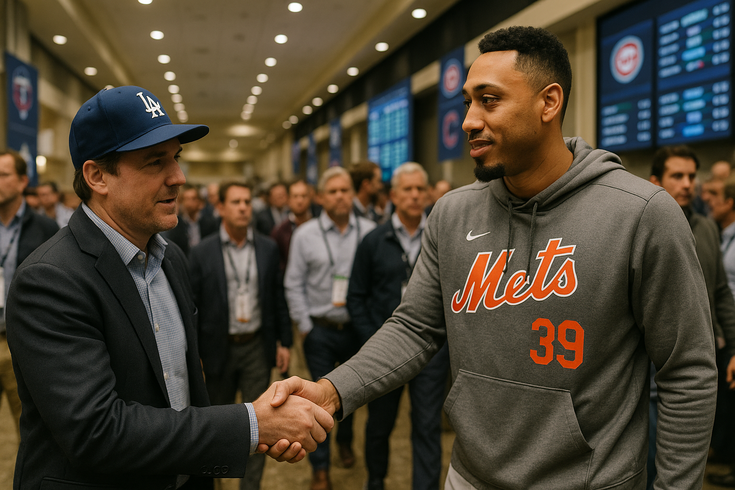
The big headlines that lit up Orlando
The winter meetings this year may not have produced a blockbuster $700‑million‑plus contract, but a handful of marquee signings still turned heads. Veteran power hitter Kyle Schwarber chose to re‑join the Philadelphia Phillies on a five‑year pact, while the Los Angeles Dodgers splurged on closer Edwin Diaz, handing him a three‑year, $69 million deal that set a new annual‑value record for a reliever. Across the river, the Baltimore Orioles swung for the fences themselves, locking up former Mets slugger Pete Alonso on a five‑year, $155 million agreement.
Free‑agent fireworks: Winners and losers
When you line up the deals, the Dodgers emerge as the clear‑cut victors. Their acquisition of Diaz plugs a glaring hole in the bullpen and does so on a short‑term, high‑value contract that fits their usual fiscal playbook. The Phillies also walked away smiling, getting Schwarber back in town and preserving a potent middle‑of‑order bat that had been a looming question mark all season.
On the flip side, the New York Mets endured a brutal 48‑hour stretch that saw them lose three of their marquee pieces: closer Edwin Diaz departed for L.A., first‑baseman Pete Alonso headed to Baltimore, and a day later the club’s beloved third‑baseman Brandon Nimmo was traded away. The cumulative impact of those moves has left the Mets’ front office scrambling to rebuild a core that fans thought was set.
Trade whispers and the “untouchable” debate
While free‑agency headlines dominated, the trade market quietly simmered. Detroit’s ace Tarik Skubal was the subject of endless speculation. Tigers president Scott Harris hinted that no player is truly off‑limits, even if the club’s fans would balk at seeing their best arm shipped out. That comment kept the rumor mill churning, especially as the Tigers face a likely re‑signing battle with Skubal when his contract expires next winter.
Other names floated around the conference tables: Miami’s Edward Cabrera, a 27‑year‑old starter with three controllable years, was linked to Baltimore; and the Rangers’ shortstop Corey Seager was reportedly on the radar of several teams, though Texas made it clear they have no intention of moving him unless the return is overwhelming.
Automation, catchers and the new challenge system
Beyond player movement, the meetings featured a heated discussion about Major League Baseball’s upcoming automated ball‑strike (ABS) system. Managers expressed a range of opinions, but one theme emerged: catchers could become the de facto initiators of challenge calls, potentially elevating their strategic importance. If the league adopts a catcher‑driven challenge protocol, we may see a new statistical category tracking “challenge success rates” that could reshape how teams value the position.
Manager salaries lag behind the rest of pro sports
Another subplot that didn’t get as many headlines was the ongoing disparity between MLB manager compensation and that of top coaches in the NFL, NBA and NHL. Analysts noted that while owners are willing to splash on elite talent on the field, the salaries of the men behind the dugout still trail behind their counterparts in other major leagues, a gap that could become a recruiting challenge as the sport modernizes.
Who left fans scratching their heads?
One trade that raised eyebrows was Baltimore’s decision to send promising young pitcher Grayson Rodriguez to the Angels in exchange for veteran outfielder Taylor Ward. The move seemed counter‑intuitive for a club that just poured money into a first‑baseman, especially when the Orioles’ biggest need appears to be starting pitching depth.
Equally puzzling was the Reds’ failure to outbid the Phillies for Schwarber. Cincinnati, a market that could have used a power bat like his, watched the deal slip away, leaving many to wonder if the organization missed a rare opportunity to boost both on‑field performance and fan engagement.
Pressure points heading into the next phase
The Mets now sit under a cloud of expectation. Owner Steve Cohen has deep pockets, but the front office must act quickly to plug holes in the rotation and re‑tool the lineup before the season starts. The Blue Jays, fresh off a division title, are in a position to double down, having already splashed $210 million on reliever Dylan Cease and eyeing other high‑profile targets.
Meanwhile, the Yankees feel the heat after Toronto’s aggressive spending. With Toronto adding Cease and potentially chasing other marquee names, New York’s front office can’t afford to sit idle if they hope to stay competitive in the AL East.
Looking ahead: What to watch for
As the offseason rolls on, a few storylines will dominate the conversation. First, the pending negotiations with Japanese starter Tatsuya Imai, who must decide by Jan. 2, could set a precedent for future overseas signings. Second, the market for high‑caliber second basemen—players like Ketel Marte, Brendan Donovan and Brandon Lowe—remains wide open, and any surprise move could reshape several rosters.
Finally, the looming collective bargaining discussions about a potential salary cap could dramatically alter how teams approach both free agency and trades. If a cap materializes, clubs will need to get creative with contract structures, incentives and player development pipelines.
In short, Orlando may not have delivered a $700 million blockbuster, but the moves that did happen, the rumors that lingered, and the strategic debates that unfolded have set the stage for a fascinating 2025‑26 season. Stay tuned, because the real action is only just beginning.

