


What sparked the courtroom drama?
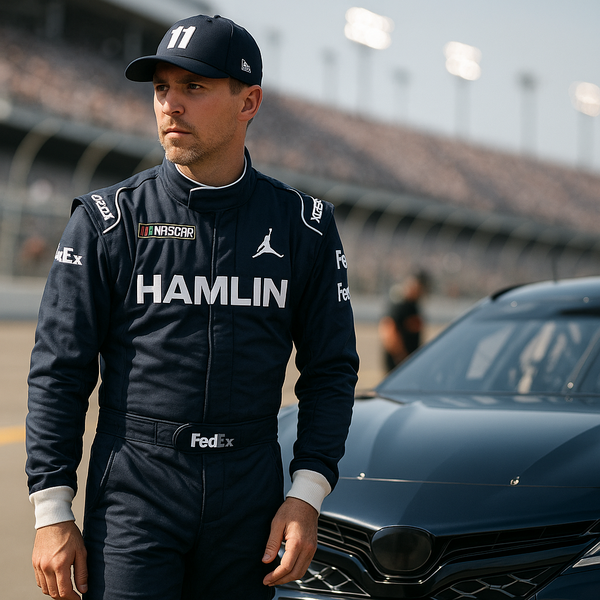
On a brisk Tuesday morning, the atmosphere in the courtroom was anything but ordinary. Denny Hamlin, the celebrated driver who’s also a part‑owner of 23XI Racing, sat down for a direct examination that quickly turned into a heated cross‑examination. The focus? A lawsuit filed by 23XI Racing and Front Row Motorsports alleging that NASCAR’s business practices choke competition. Hamlin’s testimony gave a rare glimpse into the simmering tension between a top‑tier driver‑owner and the sport’s governing body.
“We’re not a monopoly, you are” – the mantra that echoed
Throughout the questioning, Hamlet‑like repetitions of “we’re not a monopoly like you are” rang out. Hamlin’s delivery was pointed, his emphasis making it clear he wasn’t just defending his team’s interests but also challenging NASCAR’s grip on the market. The phrase landed squarely on the ears of Lawrence Buterman, NASCAR’s antitrust defense attorney, who tried to steer the conversation toward contractual nuances rather than broader market power.
Contracts under the microscope
Buterman raised a specific example: a contract Riley Herbst signed with 23XI last season that bars him from hopping to another series without permission. He likened this to the exclusivity clauses NASCAR imposes on its teams, suggesting both are comparable restraints. Hamlin snapped back, insisting that his team’s agreements simply offer drivers choices, whereas NASCAR’s rules, in his view, leave little room for maneuver.
Money talks – but who’s hearing?
Revenue sharing became another flashpoint. The lawyer asked Hamlin to quantify the slice of team earnings that drivers actually receive, then compared it to the portion NASCAR hands back to its affiliates. Hamlin countered that teams shoulder additional expenses that the sanctioning body doesn’t, implying a mismatch in how costs and profits are allocated. He repeated the monopoly accusation, emphasizing that drivers have the freedom to shop around, a liberty he claims NASCAR denies.
Text messages, contracts, and the “lock‑up” debate
In a surprising turn, the questioning veered into Hamlin’s private communications with Michael Jordan, who co‑owns 23XI. A text thread revealed Jordan urging Hamlin to “lock him up” – a reference to signing driver Corey Heim to a long‑term deal. Buterman seized on the phrase, drawing a parallel to NASCAR’s alleged practice of “locking tracks up” for its own benefit. The exchange highlighted the fine line between strategic team moves and the broader antitrust claims.
Old grievances resurfaced
The courtroom drama also dredged up a tense conversation from a 2022 Nashville awards banquet. Hamlin recalled a blunt remark from NASCAR CEO Jim France, who suggested teams should slash their budgets in half. Hamlin’s retort was that such cuts were unrealistic; the sport’s recent reductions in practice time and race weekend length had already left teams “down to the dirt.” This anecdote underscored the growing disconnect between the sport’s leadership and its team owners.
Charter terms and the seven‑year gamble
Buterman introduced NASCAR’s proposed seven‑year charter agreement, complete with a seven‑year extension, as a “positive” offer. The catch? Fixed payments rather than a revenue‑share model, and no room for negotiation on the extension. Hamlin warned that 23XI would be forced out of business under those conditions, especially if NASCAR’s broadcast rights skyrocket after 2031. His dry response, “well, thank you, I appreciate that,” left the courtroom buzzing.
Damages claim: a $105 million ask
The financial stakes are massive. Hamlin is seeking $105 million in damages, a figure that translates to a 900 percent return on his $45 million initial investment for a 40 percent stake in 23XI. The remaining 60 percent is owned by Michael Jordan and Curtis Polk. Hamlin framed the demand as a quest to be “made whole” after what he describes as NASCAR’s anti‑competitive conduct.
Driver salaries and the “top of my game” defense
When pressed about his own earnings, Hamlin disclosed a $14 million annual salary from his primary ride with Joe Gibbs Racing. He defended the figure by saying he’s at the peak of his performance, winning races and championships that most drivers never achieve. The lawyer pushed back, noting that most drivers don’t command such paychecks, but Hamlin retorted that his results justify the compensation.
The Driver Ambassador Program – a sore spot
Another bone of contention was NASCAR’s newly minted Driver Ambassador Program (DAP). Hamlin called it the “biggest pet peeve” for team owners, arguing that while drivers get paid to promote the sport, the teams foot 40 percent of the bill and see little return on that investment. He insisted that the program siphons off the sport’s most valuable asset – its drivers – and redirects their marketing power away from the teams that actually employ them.
Public praise versus private frustration
Hamlin’s public persona often paints a sunny picture of NASCAR. On the Kenny Wallace Show and in Netflix’s “Full Speed,” he praised the NextGen car for lowering barriers to entry and touted its cost‑containment benefits. Yet in the courtroom, he painted a starkly different portrait, accusing the organization of lashing out whenever he voices dissent. “If I say something negative, I get a call,” he claimed, suggesting a culture of intimidation behind the scenes.
Internal disagreements aired
The trial also revealed friction among 23XI’s leadership. Emails from executives Gene Mason, Jordan, and Polk labeled Hamlin a “terrible businessman” who spends recklessly. Hamlin brushed off the criticism, noting that while 75 percent of teams lose money, 23XI has remained profitable while chasing wins. He explained a $35 million AirSpeed facility as a strategic investment, even if some partners balked at the cost.
Looking ahead: Hamlin’s long‑term vision
Despite the courtroom heat, Hamlin reiterated his commitment to NASCAR. He told Jordan in an August 2023 text that he wanted to stay involved for the long haul, even as he contemplated a buy‑out of his ownership stake. He framed the internal debates as normal business disagreements, the kind any company works through over a round of drinks at a country club.
What this means for the sport
The trial is still in its early stages, but Hamlin’s testimony has already sparked a broader conversation about how NASCAR structures its relationships with teams, drivers, and sponsors. If the jury sides with 23XI and Front Row, the sport could face a seismic shift in charter agreements, revenue sharing, and driver marketing rights. For fans, the outcome may determine how competitive the grid looks in the next decade.

