


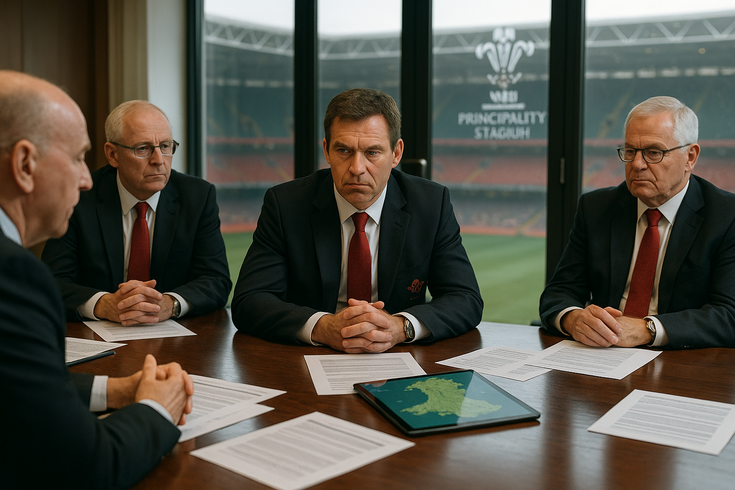
After months of heated debate, the Welsh Rugby Union (WRU) appears poised to abandon the radical idea of shrinking the professional game to just two clubs. The formal consultation that opened the door to sweeping change wrapped up this week, and insiders say the board will likely announce a new direction by the end of October.
Why the two‑team blueprint sparked fury
Back in June, WRU’s director of rugby and elite performance, Dave Reddin, unveiled a bold vision: consolidate the four existing regional sides into two WRU‑owned franchises, backed by a national training campus and a centralized management structure. The logic was simple on paper – fewer teams, tighter resources, and a clearer pathway to elite performance.
But the reality of Welsh rugby runs deeper than spreadsheets. Fans in Cardiff, Newport, Swansea and the Valleys see their clubs as cultural pillars, not just business units. When the proposal hit the public arena, it was met with a chorus of dissent.
Fans, players and politicians raise the alarm
A survey commissioned by the supporters’ group Gwlad Rugby, plus feedback from official fan clubs of all four regions, painted a stark picture. The majority of respondents slammed the two‑team model as a threat to regional identity, youth development and the very soul of Welsh rugby.
Even the Welsh Rugby Players’ Association (WRPA) entered the fray, issuing a statement that warned the cut could jeopardise player welfare and career prospects. Star centre Jac Morgan went as far as to say he would consider leaving Wales if the Ospreys were dissolved.
On the political front, several MPs from constituencies that host professional clubs warned that losing a team would have a ripple effect on local economies, community projects and grassroots participation.
Three‑team talk gains traction
Faced with mounting opposition, a growing number of senior voices within the WRU have started to champion a compromise: a three‑team structure, with one side operating on a tighter budget – the so‑called “2+1” model. This arrangement would keep a majority of the professional landscape intact while still delivering some cost savings.
Keeping all four sides alive remains on the table, but only if the union can negotiate a funding formula that satisfies the financial realities without crippling any region.
Who might be left out?
If the WRU moves forward with a three‑team format, the biggest question is which club would be the sacrificial lamb. Here’s a quick rundown of the contenders:
- Cardiff Rugby – Already under WRU ownership, the capital’s franchise enjoys strong backing from the board and a vocal CEO, Abi Tierney, who argues that Cardiff is indispensable for the sport’s future.
- Dragons RFC – Historically the under‑dog, the Dragons boast solid finances, private owners with deep pockets, and their own stadium – a rare asset among the regions.
- Scarlets – The Llanelli‑based side has a state‑of‑the‑art facility and recent investment from a luxury hospitality group, making them a strong candidate to stay.
- Ospreys – With a newly redeveloped St Helen’s stadium and support from Swansea City Council, the Ospreys also have a compelling case to survive.
Each club brings something unique to the table, which is why any decision will be anything but straightforward.
Possible paths to a new structure
Should the WRU decide to trim the league, there are two main routes on the table:
- Voluntary merger – The idea would be for two neighboring regions to combine forces, such as Dragons with Cardiff or Scarlets with Ospreys. However, merging rival clubs with distinct histories and fan bases is a tall order.
- Independent selection panel – An external body could be tasked with evaluating each franchise against criteria like financial health, academy success, facilities and strategic fit. This would aim to bring an element of fairness and transparency to a painful process.
Both options carry their own set of challenges, especially if one club is relegated to a development‑only status rather than being fully dissolved.
What about keeping all four?
Sticking with the status quo would be a win for the die‑hard supporters, but the WRU’s financial statements tell a cautionary tale. While chief financial officer Leighton Davies recently highlighted that the union’s coffers are healthier than in previous years, the gap between the cost of running four fully funded regions and the available budget remains significant.
Proposed budget splits have floated around figures like £8 million for the top club, £5.5 million for two others and £4 million for the fourth. Even with those numbers, questions loom about whether the WRU can sustain such an arrangement without further cuts elsewhere.
Looking ahead
The clock is ticking. The WRU board is expected to deliver its final verdict before the month rolls over, and the rugby community is bracing for the announcement. Whether the union settles on a three‑team model, reverts to four, or even revisits the two‑team concept in a different guise, the decision will reverberate through the valleys, the cities and the national team’s talent pipeline.
One thing is clear: Welsh rugby stands at a crossroads where tradition, finance and ambition intersect. The outcome will shape not just the professional clubs, but also the next generation of players who dream of wearing the red jersey on the world stage.

